
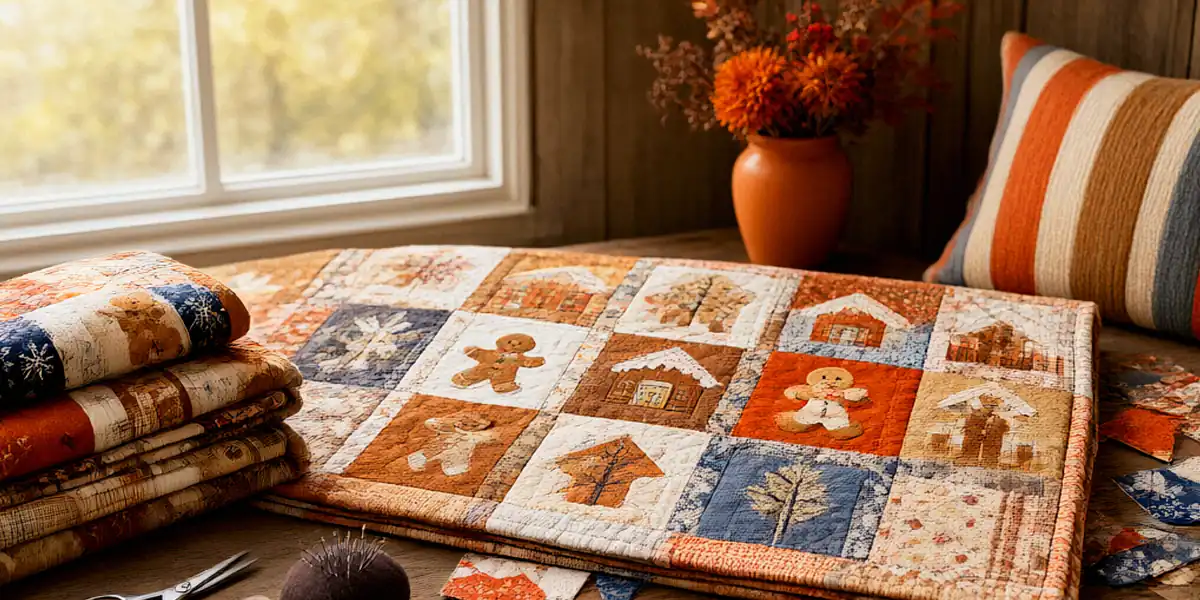
Ginger Quilts: Your Canadian Quilting Hub for Patterns, Tutorials & Reviews
There’s a particular kind of magic that happens when the snow piles up outside the window, the kettle whistles, and you settle into your favourite chair with a lap full of fabric and a needle in hand. We’ve spent countless winter evenings like that — the wind howling off the Prairies or the rain drumming on a Vancouver roof while our sewing machines hummed along in happy defiance. Quilting in Canada comes with its own rhythms: shorter daylight hours that practically beg for cozy indoor projects, a deep appreciation for warm layers, and a community of makers stretched across six time zones who somehow always feel close. Whether you’re piecing your first nine-patch in a Newfoundland kitchen or longarming a king-size masterpiece in a Calgary basement studio, you belong to something bigger. That’s exactly why we built Ginger Quilts — a home base for Canadian quilters who want honest reviews, practical tutorials, and patterns that speak to our seasons, our landscapes, and our shared love of making. So pour yourself something warm, and let’s talk quilting.
Quilt Patterns for Every Canadian Quilter
One of the things we love most about the quilting world is that there’s genuinely a pattern for every taste, skill level, and timeline. Maybe you want a quick baby quilt for a coworker’s shower next month, or perhaps you’re dreaming about a hand-pieced heirloom that will take you through three winters. Either way, the pattern landscape has never been richer. We keep a close eye on what’s trending in the Canadian quilting scene — and yes, that often means designs inspired by maple leaves, northern lights, snowy evergreens, and the rugged coastlines of the Maritimes.
When we’re hunting for new patterns, a few names come up again and again. Missouri Star Quilt Company is a favourite for its enormous library of tutorials and pre-cut-friendly designs — their YouTube channel alone has taught millions of quilters how to piece everything from disappearing nine-patches to intricate Dresden plates. Closer to home, Northcott Fabrics, a Canadian fabric manufacturer based in Ontario, offers a wonderful selection of free patterns on their website that pair beautifully with their fabric collections. We often recommend starting there if you want a pattern that’s been designed specifically to work with fabric you can actually find at your local shop.
Below, we’ve broken down our favourite pattern categories so you can jump straight to what suits your current project — or your current mood.
Beginner-Friendly Quilt Patterns
If you’re new to quilting, the biggest favour you can do for yourself is choose a pattern that builds confidence rather than frustration. We always tell beginners to start with designs that rely on straight seams, generous pieces, and forgiving layouts. The classic nine-patch, the jelly roll race quilt, and the simple strip quilt are all excellent first projects because they teach you the fundamentals — accurate cutting, consistent seam allowances, and pressing — without overwhelming you with tricky angles or tiny pieces.
Pre-cut fabrics are a beginner’s best friend. A jelly roll (2.5-inch strips), a charm pack (5-inch squares), or a layer cake (10-inch squares) removes most of the cutting work and lets you focus on sewing. Missouri Star Quilt Company has built much of its reputation on patterns designed around these pre-cuts, and their free tutorials walk you through each step at a gentle pace. If you’d rather work with Canadian-designed patterns, check Northcott Fabrics’ free pattern section — many of their designs are written with clear diagrams and beginner-friendly instructions.
A few of our go-to beginner patterns include:
- Jelly Roll Race Quilt — sew strips end to end, fold, repeat, and you have a quilt top in an afternoon.
- Disappearing Nine-Patch — start with a simple nine-patch, cut it apart, rearrange, and suddenly you look like a genius.
- Charm Pack Picnic Quilt — perfect for showcasing a favourite fabric collection with minimal cutting.
- Simple Stripe Baby Quilt — a fast, satisfying project that makes a wonderful gift.
- Rail Fence — three strips per block, endless layout possibilities.
Our advice? Don’t worry about perfection on your first quilt. Finished is better than flawless, and every wobble in your seam allowance is a lesson learned. By quilt number three, you’ll be amazed at how far you’ve come.
Seasonal & Canadian-Themed Patterns
Here’s where things get really fun for us. Canadian quilters have a natural affinity for seasonal projects — after all, our year is practically divided into quilting seasons. Winter calls for flannel-backed snuggle quilts and snowflake appliqué. Spring brings pastel baby quilts and garden-inspired designs. Summer is for picnic quilts and patriotic red-and-white projects. And autumn? Autumn is for everything pumpkin, maple leaf, and harvest gold.
Canadian-themed patterns have a special place in our hearts. We’ve seen gorgeous maple leaf quilts, northern lights gradient quilts, and even patterns inspired by Group of Seven paintings. If you’re looking for something distinctly Canadian, Northcott Fabrics often releases collections celebrating Canadian wildlife, landscapes, and heritage — and they frequently provide matching free patterns. Their “Oh Canada” themed fabrics have been a hit with quilters from Victoria to St. John’s.
Seasonal quilting also gives you a wonderful excuse to rotate your decor. We know quilters who have a dedicated “winter quilt” for the living room couch, a lighter spring quilt for the guest bed, and a Halloween quilt that comes out every October like clockwork. If you’re building a seasonal collection, here are some ideas to get you started:
- Winter: Snowflake appliqué wall hangings, flannel rag quilts, red-and-green Christmas throws.
- Spring: Pastel baby quilts, flower basket blocks, Easter table runners.
- Summer: Picnic quilts in bright prints, beach-themed wall hangings, Canada Day red-and-white designs.
- Autumn: Maple leaf quilts, pumpkin patch table toppers, harvest-coloured lap quilts.
One tip from our team: if you’re making a seasonal quilt, consider quilting it with a design that matches the theme. Falling leaves, snowflakes, or sunbursts in your free-motion quilting can elevate a simple pattern into something truly special.
Modern & Traditional Pattern Collections
The great thing about quilting in 2024 is that you don’t have to choose between modern and traditional — you can love both. Traditional patterns like Log Cabin, Flying Geese, Dresden Plate, and Double Wedding Ring have been passed down for generations, and there’s a reason they’ve stood the test of time. They’re beautiful, they’re versatile, and they connect us to the quilters who came before us.
Modern quilting, on the other hand, embraces negative space, bold geometric shapes, improvisational piecing, and often a more minimalist aesthetic. Designers like Elizabeth Hartman, Tula Pink, and Suzy Quilts have brought a fresh energy to the craft that resonates with a new generation of makers. Many Canadian quilt shops now carry patterns from both worlds, and we love seeing how quilters blend them — a traditional block set in a modern layout, or a modern colour palette applied to an antique design.
If you’re building your pattern library, we suggest collecting a mix. Start with two or three traditional blocks you can master, then add a modern pattern that stretches your skills. Missouri Star Quilt Company offers patterns across the entire spectrum, and Northcott Fabrics’ free patterns often bridge the gap beautifully with designs that feel fresh yet familiar. Over time, you’ll develop your own signature style — and that’s when quilting becomes truly personal.
Master Free-Motion Quilting with Our Tutorials
Free-motion quilting is one of those skills that can feel intimidating right up until the moment it clicks — and then it becomes addictive. We remember our first attempts: tension troubles, wobbly stitches, and a lot of muttering under our breath. But once we got the hang of it, free-motion quilting transformed our projects. Suddenly, the quilting itself became a design element, not just a functional afterthought.
Whether you’re quilting on a domestic machine or a longarm, the principles are the same: you’re moving the fabric (or the machine) in a coordinated dance to create stitches wherever you want them. The learning curve is real, but so is the payoff. In this section, we’ll walk you through the basics, share some advanced designs to aspire to, and troubleshoot the issues that trip up almost every quilter at some point.
We’ll also talk machines. If you’re considering a longarm, brands like Handi Quilter are widely available across Canada through authorized dealers, and their machines are a popular choice for quilters who want more throat space and smoother stitching. Bernina is another trusted name, beloved for its precision and the loyal community that surrounds it. Both brands offer models suited to different budgets and space constraints, so there’s something for everyone.
Free-Motion Quilting Basics
Before you dive into free-motion quilting, you need a few essentials in place. First, your machine needs to be able to drop its feed dogs — most modern machines can, but check your manual. Second, you’ll want a free-motion quilting foot (sometimes called a darning foot or hopping foot), which holds the fabric down as you move it. Third, you’ll need to practise your tension on a scrap sandwich before you commit to your actual quilt.
Here’s the basic setup we recommend for beginners:
- Make a practice sandwich. Layer two pieces of muslin with a piece of batting in between, and baste it well. This is your practice canvas.
- Lower your feed dogs. This lets you move the fabric freely in any direction.
- Attach your free-motion foot. Make sure it’s the right one for your machine.
- Set your stitch length to zero. You control the stitch length by how fast you move the fabric.
- Find your speed. The golden rule: move your hands at a medium pace and run the machine at a medium-to-fast speed. Slow hands and fast machine = smooth stitches.
- Start with a simple meander. Also called a stipple, this is the classic beginner design — just wiggly lines that never cross.
Practise for at least fifteen minutes before you start on a real quilt. Your first few minutes will feel clumsy; your last few will feel much better. That’s normal. Muscle memory takes time, and every quilter we know has a stack of practice sandwiches hidden somewhere in their studio.
Advanced Free-Motion Designs
Once you’ve mastered the meander, a whole world of designs opens up. Feathers, pebbles, swirls, paisleys, McTavishing, ruler work, and thread painting are all within reach with practice. We love how each design has its own personality — feathers feel elegant and traditional, pebbles feel modern and playful, and swirls add movement to any quilt.
Here are some of our favourite advanced designs to work toward:
- Feathers: Classic, flowing, and endlessly variable. Start with a simple spine and add loops on each side.
- Pebbles: Circles of varying sizes packed together. Great for backgrounds and modern quilts.
- Swirls: Continuous spiral shapes that add motion and texture.
- Paisleys: A hybrid of swirls and teardrops — very forgiving and beautiful.
- McTavishing: A dense, flowing design that creates incredible texture. Named after quilter Karen McTavish.
- Ruler Work: Using specialized rulers to create precise straight lines, curves, and geometric shapes.
If you’re quilting on a longarm like a Handi Quilter, you’ll find that advanced designs feel more accessible because the machine does more of the work. On a domestic machine, you’ll need to build up your coordination gradually. Either way, the key is repetition. Pick one design and fill an entire practice sandwich with it before moving on to the next.
Troubleshooting Common Free-Motion Issues
Every free-motion quilter runs into problems — even the pros. The good news is that most issues have straightforward solutions. Here are the ones we hear about most often, along with our fixes:
- Eyelashes on the back (loops of thread): Usually a tension issue. Check your top tension first, then your bobbin. Rethread both. If it persists, your bobbin case may need adjusting.
- Broken needles: Often caused by moving the fabric too fast for the machine speed, or by pulling the fabric rather than guiding it. Slow down your hands and speed up the machine.
- Skipped stitches: Could be a dull needle, incorrect needle type, or the wrong foot. Replace your needle and make sure you’re using a quilting needle.
- Wobbly stitches: Almost always a speed issue. Remember: medium hands, fast machine.
- Thread shredding: Check your needle size, thread path, and whether your thread is old or poor quality. Sometimes a different brand of thread solves the problem instantly.
- Puckering: Usually a basting issue. Make sure your quilt sandwich is well basted — spray baste, pins, or thread baste, whichever you prefer.
One more tip: keep a notebook. Write down your machine settings, thread brands, and needle sizes for each project. When something works beautifully, you’ll want to remember exactly what you did. When something goes wrong, you’ll have a record to troubleshoot from. We’ve been doing this for years, and our notebooks are some of our most valuable quilting tools.
Fabric Reviews & Shopping Guide for Canadian Quilters
Let’s talk fabric — the heart of every quilt. As Canadian quilters, we have some unique considerations when it comes to buying fabric: shipping costs from US retailers, duty and customs fees, and the simple fact that our local shops are sometimes fewer and farther between than we’d like. But the good news is that Canada has a thriving fabric ecosystem, from big-box stores to small independent shops to Canadian manufacturers who produce world-class textiles.
In this section, we’ll share our thoughts on the top fabric brands, where to shop across the country, and how to care for your fabric so it stays beautiful for years. We’ve spent a lot of time (and a lot of money) testing fabrics and shopping at stores from coast to coast, so consider this your shortcut to smarter fabric buying.
Top Fabric Brands for Quilting
Quilting fabric comes in a range of qualities, and the differences matter. Lower-quality fabrics may fray easily, fade quickly, or feel stiff. Higher-quality fabrics — usually 100% cotton with a tight weave — are a joy to work with and hold up beautifully over time. Here are the brands we reach for most often:
- Northcott Fabrics: A Canadian manufacturer based in Ontario, Northcott produces beautiful, high-quality quilting cotton with a focus on Canadian-inspired designs. Their fabrics are widely available across Canada and beyond.
- Moda Fabrics: Known for their coordinated collections and gorgeous colour palettes. A staple in quilt shops everywhere.
- Robert Kaufman: Particularly famous for Kona Cotton, a solid fabric available in hundreds of colours. A must-have for modern quilters.
- Riley Blake Designs: Fun, fresh prints and a great range of basics. Popular for children’s quilts and seasonal projects.
- FreeSpirit Fabrics: Home to designer collections from names like Tula Pink and Kaffe Fassett. Bold, artistic, and inspiring.
- Andover Fabrics: Classic and modern collections alike, with excellent quality and rich colour saturation.
When you’re shopping, look for 100% cotton quilting fabric — not apparel cotton, which is usually too lightweight. Pre-washing is a personal choice; we usually pre-wash to prevent colour bleeding and shrinkage, but many quilters prefer the crisp feel of unwashed fabric. Either way, be consistent within a project.
Where to Buy Fabric in Canada
Canada has a wonderful variety of places to buy quilting fabric, both in person and online. Here are some of our favourites:
- Fabricland: With stores across Canada, Fabricland is one of the most accessible options for Canadian quilters. Their quilting cotton selection varies by location, but they often carry popular brands and offer frequent sales. If you have a Fabricland nearby, it’s worth checking regularly.
- The Quilting Bee: An online retailer with a loyal following among Canadian quilters. They carry a curated selection of fabrics, patterns, and notions, and they ship quickly within Canada.
- Local quilt shops: Independent quilt shops are the heart of our community. They offer expert advice, classes, and a sense of belonging that big-box stores can’t match. Support them whenever you can.
- Online Canadian retailers: Stores like Mad About Patchwork, Fabric Spot, and Dinkydoo Fabrics offer excellent online shopping with Canadian shipping.
- Etsy and small makers: Many Canadian sellers offer curated fabric bundles and hard-to-find prints.
Shipping considerations matter. When ordering from US retailers, always factor in exchange rates, shipping costs, and potential duty. Sometimes a slightly higher price at a Canadian retailer ends up being cheaper overall. We’ve learned this the hard way more than once!
Fabric Care & Storage Tips
Proper fabric care starts before you cut and continues long after your quilt is finished. Here are our top tips for keeping your fabric and quilts in beautiful condition:
- Pre-wash if you plan to wash the finished quilt. Use a gentle detergent and cool water. Add a colour catcher sheet if you’re worried about bleeding.
- Press, don’t iron. Pressing (lifting and lowering the iron) prevents distortion; ironing (sliding) can stretch fabric.
- Store fabric away from direct sunlight. UV rays fade colours over time.
- Use acid-free storage materials. Cardboard and some plastics can cause discolouration over the long term.
- Fold rather than hang quilts. Hanging can stretch the fabric and distort the shape over time. If you must hang, use a wide, padded rod and rotate regularly.
- Rotate your quilts. If you display a quilt on a bed or wall, rotate it every few months to distribute wear evenly.
- Wash finished quilts gently. Use a front-loading machine on a gentle cycle, or hand wash in a bathtub for delicate quilts. Air dry flat.
We also recommend keeping a small stash of your favourite fabrics on hand — not just for emergencies, but for inspiration. There’s nothing like opening a drawer of beautiful fabric to spark a new project idea.
Community & Resources for Canadian Quilters
Quilting might be a solitary activity in the moment, but it’s anything but lonely. The Canadian quilting community is warm, generous, and always eager to welcome newcomers. Whether you’re looking for in-person guild meetings, online forums, or big events to attend, there’s something for everyone — and connecting with other quilters is one of the best ways to grow your skills and stay inspired.
We’ve made some of our closest friendships through quilting, and we can’t recommend community involvement highly enough. Here’s how to plug in.
Joining Local Quilting Guilds
Quilting guilds are the backbone of the Canadian quilting community. They offer monthly meetings, guest speakers, workshops, show-and-tell, charity projects, and a chance to connect with quilters at every skill level. The Canadian Quilters’ Association (CQA) is the national organization that supports guilds and individual members across the country. Joining the CQA gives you access to their newsletter, resources, and the annual Quilt Canada conference — a must-attend event for serious quilters.
To find a guild near you, try these approaches:
- Ask at your local quilt shop — they usually know every guild in the area.
- Visit the Canadian Quilters’ Association website for a guild directory.
- Check community centre bulletin boards and library notice boards.
- Search Facebook for “[your city] quilt guild” — many guilds have active pages.
Don’t be shy about attending as a guest first. Most guilds welcome visitors, and you’ll quickly get a sense of whether the group is a good fit. We’ve never regretted joining a guild — the knowledge sharing alone is worth the membership fee.
Upcoming Quilting Events in Canada
Canada hosts a wonderful calendar of quilting events throughout the year, from large shows to intimate workshops. Here are some highlights to watch for:
- Quilt Canada: The Canadian Quilters’ Association’s annual conference and show, held in a different Canadian city each year. Features workshops, lectures, a huge merchant mall, and an inspiring quilt show.
- Toronto Quilting Show: One of the largest quilting events in Ontario, featuring vendors, exhibits, and classes. A great excuse for a road trip if you’re not local.
- Vancouver Quilt Shows: Several shows take place throughout the Lower Mainland each year, often hosted by local guilds. Check local listings for dates.
- Provincial guild shows: Most provinces host annual shows through their guild associations — a fantastic way to see regional talent.
- Local shop events: Many quilt shops host trunk shows, classes, and shop hops. Sign up for their newsletters to stay in the loop.
We try to attend at least one big event each year. The inspiration is unmatched — you’ll leave with a camera full of quilt photos, a bag full of fabric, and a heart full of ideas.
Online Quilting Communities & Forums
If you can’t get to an in-person event, online communities are a wonderful alternative. Some of our favourites include:
- Facebook groups: Search for “Canadian Quilters” or specific pattern/machine groups. These are active, friendly, and full of helpful advice.
- Instagram: Follow hashtags like #canadianquilter, #quiltsofinstagram, and #freemotionquilting for daily inspiration.
- YouTube: Channels like Missouri Star Quilt Company, Angela Walters, and many Canadian quilters offer free tutorials.
- Ravelry and Quilting Board: Traditional forums with deep archives of information.
- Reddit: r/quilting is a welcoming community with quilters from around the world, including many Canadians.
Online communities are especially valuable for quilters in remote or rural areas. We’ve seen quilters in small northern towns build thriving friendships through Facebook groups and Zoom sew-alongs. Distance doesn’t have to mean isolation.
Frequently Asked Questions
What’s the best quilt pattern for a total beginner in Canada?
We always recommend starting with a simple pattern like a jelly roll race quilt, a nine-patch, or a charm pack quilt. These patterns use pre-cuts, require only straight seams, and come together quickly. Missouri Star Quilt Company has excellent free tutorials for all of these, and Northcott Fabrics offers free beginner-friendly patterns designed to pair with their Canadian-made fabrics. Your first quilt doesn’t need to be complicated — it just needs to be finished.
Do I need a longarm machine to do free-motion quilting?
Not at all. You can absolutely do free-motion quilting on a domestic sewing machine — millions of quilters do. A longarm machine like a Handi Quilter gives you more throat space and smoother stitching, which makes larger quilts easier to manage, but it’s not a requirement. Start with your domestic machine, practise on sandwiches, and upgrade later if you fall in love with the process. Bernina also makes domestic machines with excellent free-motion capabilities.
Where can I buy quality quilting fabric in Canada?
You have several great options. Fabricland stores across Canada carry quilting cotton, often at competitive prices. Independent quilt shops offer curated selections and expert advice. Online Canadian retailers like The Quilting Bee, Mad About Patchwork, and Dinkydoo Fabrics ship quickly within Canada. And of course, Northcott Fabrics, a Canadian manufacturer, produces beautiful fabrics available at shops nationwide. Buying from Canadian retailers often saves you on shipping, duty, and exchange rates.
How do I connect with other quilters in Canada?
Join a local guild — the Canadian Quilters’ Association (CQA) has a guild directory on their website. Attend events like Quilt Canada or the Toronto Quilting Show. And don’t overlook online communities: Facebook groups, Instagram, and forums like r/quilting are full of friendly Canadian quilters. Whether in person or online, the Canadian quilting community is warm and welcoming.
How should I care for my finished quilts?
Wash gently with a mild detergent in cool water, either by hand or on a gentle machine cycle. Air dry flat or use a low-heat dryer setting. Store quilts folded rather than hung, rotate them if they’re on display, and keep them out of direct sunlight. With proper care, a well-made quilt can last for generations — which is exactly the point.
Quilting is a journey, not a destination, and the joy comes as much from the community as from the craft itself. Whether you’re piecing your first block or quilting your hundredth heirloom, we hope Ginger Quilts becomes a trusted companion on your creative path. We’re here to share patterns, troubleshoot problems, celebrate your finishes, and cheer you on through every stitch. So bookmark this page, subscribe to our newsletter, and drop us a note about what you’re working on — we’d love to hear from you. Happy quilting, Canada!
Latest articles
- Your First Quilt: A Beginner’s Roadmap
 Your First Quilt: A Beginner’s Roadmap Walking into a fabric store as a brand-new quilter can feel like stepping into a foreign
- Reviewing a Quilt Pattern: What to Look For
 Reviewing a Quilt Pattern: What to Look For Before You Sew You’ve just spotted it — the perfect quilt pattern. The photo
- Pre-Cuts Explained: Charm Packs, Jelly Rolls, Layer Cakes
 Pre-Cuts Explained: Charm Packs, Jelly Rolls, Layer Cakes You walk into your local quilt shop with a simple plan: pick up a
- Modern Quilting vs Traditional: What’s the Difference?
 Modern Quilting vs Traditional: What’s the Difference? At our last guild meeting in Toronto, we nearly ran out of chairs because a
- Joining a Quilt Guild in Canada
 Joining a Quilt Guild in Canada: What We Wish We Knew Sooner We still remember walking into our first guild meeting with
- How to Bind a Quilt Neatly
 How to Bind a Quilt Neatly: A Step-by-Step Guide for Canadian Quilters There’s a moment every quilter knows well: the quilt top